Showing posts with label Highrise. Show all posts

Tuesday, July 14, 2009

shanghai-apartment: Analysis on toppling over

Some more details of the the shanghai-apartment which toppled over in June. Please refer previous post for images. in the following sketches an analysis is made as to how this accident occurred. One wonders whether if end bearing piles were use instead of precast friction ones could this accident have been avoided.


(1) An underground garage was being dug on the south side, to a depth of 4.6 meters
(2) The excavated dirt was being piled up on the north side, to a height of 10 meters
(3) The building experienced uneven lateral pressure from south and north
(4) This resulted in a lateral pressure of 3,000 tonnes, which was greater than why the pilings could tolerate. Thus the building toppled over in the southerly direction.


First, the apartment building was constructed


Then the plan called for an underground garage to be dug out.
The excavated soil was piled up on the other side of the building.


Heavy rains resulted in water seeping into the ground.


The building began to shift and the concrete pilings were snapped
due to the uneven lateral pressures.


The building began to tilt.


And thus came the eighth wonder of the world.

Wednesday, July 1, 2009

Shanghai Apartment Topples Over


In the weekend’s bizarrest news, a nearly finished, newly constructed building in Shanghai toppled over, killing one worker. As can be seen in the photo below, the 13-story apartment building collapsed with just enough room to escape what would have been a far more destructive domino effect involving other structures in the 11-building complex.

The development, known as “Lotus Riverside,” has a total of 629 units, 489 of which have already been sold. Now buyers are clamoring to get their money back, and authorities are making efforts to reassure them. The assets of the project’s developer, Shanghai Meidu Property Development Co., have been frozen and the city officials said the developer’s ability to repay homebuyers was secure, according to a statement on the municipal government’s Web site (in Chinese). A hotline has been set up for Lotus Riverside buyers, and by Sunday afternoon, more than half of them had met with a group of lawyers and officials organized to help them negotiate with the developer, according to the statement.

Meanwhile, the cause of the accident is under investigation and nine unidentified people from the developer, contractor and management company have been detained.

A representative of Shanghai Meidu could not be reached for comment.

The disaster could reveal some uncomfortable facts about lax construction practices in China, where buildings are put up in a hurry by largely unskilled migrant workers, and developers may be tempted to take shortcuts.

According to Shanghai Daily, initial investigations attribute the accident to the excavations for the construction of a garage under the collapsed building. Large quantities of earth were removed and dumped in a landfill next to a nearby creek; the weight of the earth caused the river bank to collapse, which, in turn, allowed water to seep into the ground, creating a muddy foundation for the building that toppled.

The South China Morning Post noted that the pilings used in the Lotus Riverside development, made of prestressed, precast concrete piles, are outlawed in Hong Kong because they aren’t strong enough to support the kind of ultra-high buildings that are common in Hong Kong. But in mainland China, they are often used because buildings there are typically much shorter.

Quality problems have long plagued construction in China, though they seem to be more apparent in rural areas and smaller cities, not in major metropolises such as Shanghai and Beijing. When school buildings were flattened by last year’s massive Sichuan earthquake, a number of parents faulted shoddy construction for creating “tofu buildings” that fell while other nearby structures were able to withstand the impact of the quake. More recently, state media reported that several new dams along the Yellow River are in danger of collapse, a situation attributed to shoddy construction practices, embezzlement and unqualified workers.

Source


Monday, June 22, 2009

Sexing the Architecture

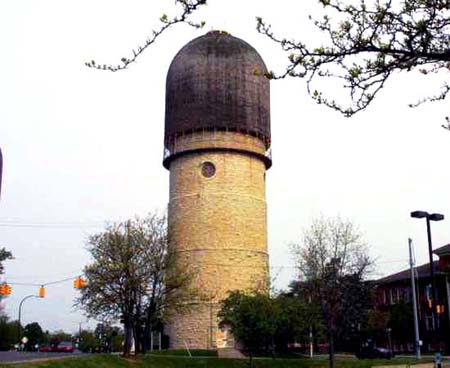
The watertower of Ypsilanti, Michigan [The Brick Dick]
Image stolen from here

It is said that modern architecture is molded by the squire’s of the patriarchal society to represent its image as icons of civilization. However the once phallocentric architecture is now changing its rigidity in favor of a more feminine sensuality.

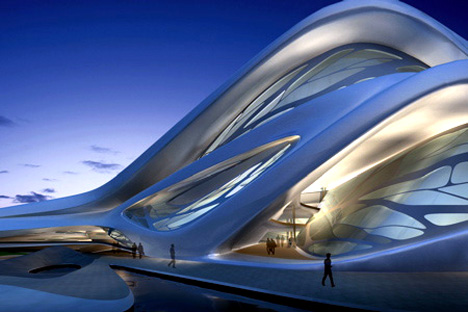
Abu Dhabi Performing Arts Centre by Zaha Hadid
Image was stolen from here

Preaching’s from Vitruvius’s 10 books on architecture to the modular man of Corbusier, have seem to be less favored in the eyes of Hadid’s lush and sensuous movements. However phallisism is yet to die off completely as designers such as Foster seem to pledge their hardcore alliance to the gargantuan temples of phallic gods, even though it should be questioned whether the once divine symbols depict the same quality as before.


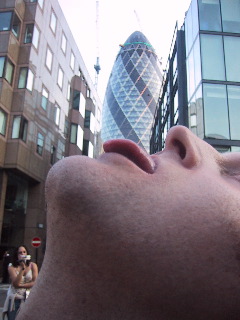
The gherkin, london in the background by Norman Foster
Image was stolen from here

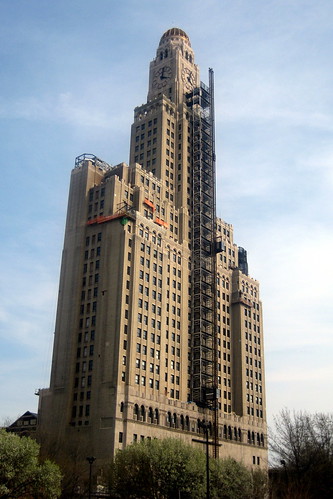
The phallic culture is defined by the rigidity, hardness, brutal and non-ornate styles that were omnipresent in the modern movement. The postmodernist such as ventury defied these set of rules and proclaimed the return to symbolism and ornate architecture, and set the stage for more illustrious projects of the deconstructivists.


Brooklyn's Williamsburgh Bank Building
Image was stolen from here

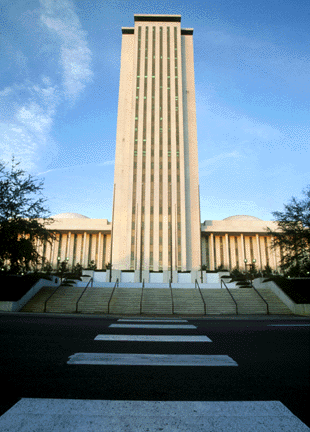
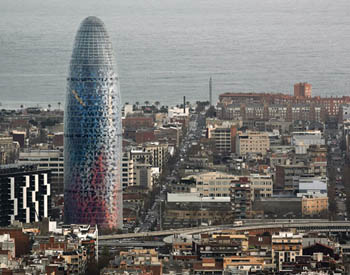
Now the question remains whether at present we create architecture of male supremacy, feminine sensuality or something totally different. If the phallic symbolization were to hold true the structures should obey the basic principles of being non-ornate, brutal beasts raging and ripping through the clouds. But when we take either the gherkin in London or the torre agbar in Barcelona they seem to have enough elegance to be dancing with the rays of light whilst playing amidst the heavens, which is far from how the symbols of patriarchal society should present themselves.


Florida State Capitol Building in Tallahassee
Image was stolen from here

As times changed cultural values have changed. The once clearly defined gender differentiation is lost in the brew of society, and it might be that these changes in values are seeping in to architecture as well. So the question we need to ask is whether similar to having male and female buildings are we also now having gay and lesbian buildings?


Torre Agbar building
Image was stolen from here

Monday, June 15, 2009

Building amidst the Clouds : Sri Lanka's Highrise's

Dr. Roland Silva, one of the most notable architects in Sri Lanka, and who is presently the chancellor of the University of Moratuwa writes,

“As architects we are not only disciplined to sip the nectar from the store houses of historical experience and dream the silhouettes of the Sri Lanka of tomorrow but also to translate these visions of a future to the reality of brick and mortar”
- Arct Roland Silva, CIA Vol 1, No 1, Jul-Dec 1972

I believe that this is the attitude that we should foster in order to develop the country. Looking back at Sri Lanka’s construction history the great builders do nothing but amaze us with their ingenuity and skill. The Jethavana, Ruvanweli, Lova maha paya, and the massive brick edifices of Polonnaruwa are just some of the wonders of ancient Lankan architecture

Jethawana Stupa (Image stolen from here)

Even though looking at the present we can see a slight increment in construction technology, we should realize that we are still to surpass the 40 storey barrier set by World Trade Center in the early 90’s.
World Trade Center Twin Towers (Image stolen from here)

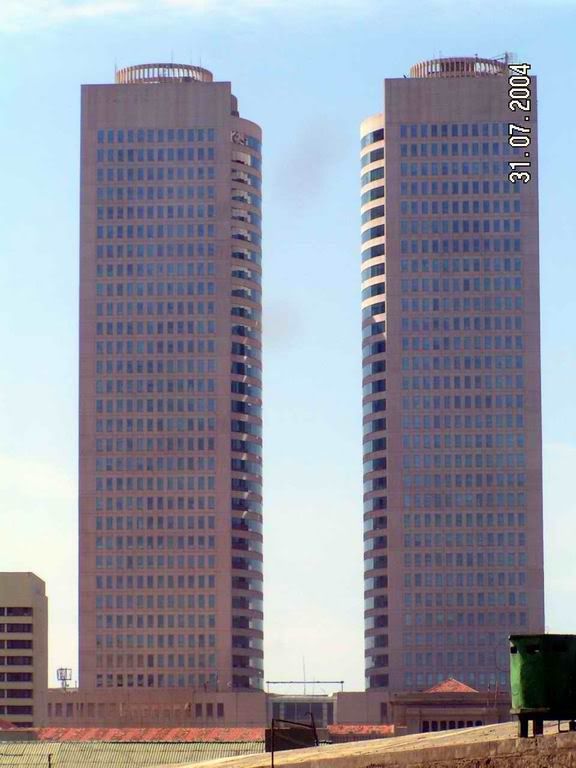
The Empire Residencies twin towers of 39 stories and 37 stories which have lately taken to the habit of adorning the havens, cannot really be thought of as competition to the twins at echelon square (WTC) since the first 10 floors are dedicated to parking.


Empire Residencies (Image stolen from here)

If The Suchir NEB project funded by an Indian company completes construction, it will become the tallest towers in the Sri Lankan sky scape, boasting of 3 towers, the tallest being a 70 storied apartment block and the shortest of a 40 storied tower dedicated to offices.

Suchir NEB Tower (Image stolen from here)

The Diamond tower proposal too was an ambitious project that was blown out of proportions way before anything concrete on the project was ever started. A US$ 150 million investment and scheduled to be completed in 2011, The 246 -metre tall tower consisting of 59 floors and 1.5 million square feet, would have set a new standard in the Colombo Sky line.

Diamond Tower(Image stolen from here)

The sad story of the celestial tower will no doubt be echoed in many of the architectural office as time goes by. The proposed giant was designed by Design Consortium Limited, a local architectural consultancy, and was to be located in Kolpity in close proximity to the temple trees. With the economic down turn and due to other security restrictions the construction has stopped half way. Surpassing the 40 storey barrier ( 45 stories to be precise) the half way constructed giant would top the sky bar if construction ever commences.


Celestial Residencies (Image stolen from here)

The Emperor (Under construction) and Monarch (Completed) are two unique designs that have been positioned in kolpity. Both designed by Singaporean architects, bring an architectural vision that would probably set a new trend in construction. The emperor once constructed would reach 35 stories (Apartments) and the Monarch reaches 20 stories.


Emperor Residencies (Image stolen from here)


Monarch Residencies (Image stolen from here)

Although we are engrossed in super tall high rises and aspire a Sri Lankan skyline that surpasses that of Manhattan, we should also probably take a different view point into consideration as well
Professor William J. Mitchell, dean of the School of Architecture, MIT, goes on to say that
“Tall buildings will persist in high-density urban cores, but enthusiasm for "super-tall trophy towers" may soon wane,
Mitchell doesn’t dismiss skyscrapers as dinosaurs of urban design, but he notes on how the digital revolution has created a "more mobile and connected workforce. When any place--from an airport lounge to a bench under a tree--can be a workplace, there is a lot less need for cubicle farms stacked up in towers."

Taking the Sri Lankan economic situation into consideration we should probably give a listen to the question posed by the great bard as well.

When we mean to build,
We first survey the plot,
then draw the model;
And when we see the figure of the house,
Then must we rate the cost of the erection;
Which, if we find outweighs ability,
What do we do then but draw anew the model
In fewer offices, or at least desist to build at all?

- William Shakespear

Sunday, June 14, 2009

The Giant that will dominate the Sri Lankan Heavens: Suchir NEB Tower

The seventy storied building which is to come up at Baththaramulla by SUCHIR NEB, is apparently on the way. The Architectural consultancy although not yet officially appointed,The building when constructed, would become the tallest tower in the sri lankan skies.


More information can be found here