Showing posts with label Sri Lankan Architects. Show all posts

Thursday, July 29, 2010

Geoffrey Bawa Awards for Architecture 2010 /2011 Launched in Colombo


Convened by the Geoffrey Bawa Trust, a media briefing was held in Colombo to launch Geoffrey Bawa Awards for Architecture 2010/2011 on July 23, 2010 at the late Architect’s residence, who would have celebrated his 91st birthday on the same day.
Architect Channa Daswatte and Ms. Sunethra Bandaranaike addressed the media on the background of the Awards and submission details, as well as what the Awards mean not only to Architects, but also to the society of Sri Lanka.
Applications are called from contenders to the Award on the prescribed forms available at the offices of the Geoffrey Bawa Trust and will be available from the July 23, 2010 from 2.00 p.m. to 5.00 p.m. and on week days thereon from 9.00 a.m. to 5.00 p.m. Documents should be submitted by November 15, 2010. Once again the award will be a sum of one million rupees and the winner chosen from the shortlist of 10 announced in May 2011. The winner will be announced at a gala event held on July 23, 2011 – Geoffrey Bawa’s 92nd birth anniversary, where the renowned author Michael Ondaatje has agreed to make the keynote address.

The judges will be Suhanya Raffel (Trustee of the Geoffrey Bawa Trust and Deputy Director Curatorial and Collection development at the Queensland Art Gallery in Brisbane Australia), Archt. Kerry Hill, Singapore, Archt. Jayantha Perera (Immediate Past President and nominee of the Sri Lanka Institute of Architects) and Mr. Ajita de Costa (Textile technologist, industrialist and heritage conservationist).

The Geoffrey Bawa Trust will embark on a national Awards scheme for the second time to recognize and reward outstanding architectural work for architecture in Sri Lanka. The main objective of the Awards is to provide national recognition to the professionals and their contribution to the community and the Country. By honouring them, the Trust will help them advance in their careers and personal networks and provide significant profiling and visibility so as to create additional opportunities and exposure to them through their association “With the world renowned name Geoffrey Bawa”.

The Award, is open to all Sri Lankans and seeks out the broadest possible range of architectural interventions. The Award specifically hopes to encourage and learn more about the works of younger architects while being a forum for emerging talent. There are no fixed criteria as to the size, type, nature or location of project. The awards embraces all kinds of building projects ranging from modest small scale interventions to major complexes in housing and urban complexes that keeps a focus on the community and its neighborhoods. The Geoffrey Bawa Awards scheme has been consciously modeled on the scheme, which is run by the Aga Khan Trust for Culture in Geneva. That is generally acknowledged to have had a very marked effect on architecture in developing countries since it was inaugurated by His Highness The Aga Khan in 1977 and has now completed eleven of its three- year cycles. The Trust also acknowledges the importance of the honour, that was bestowed upon Deshamanya Bawa when he received The Aga Khan’s Special Award for a Lifetime’s Achievement in Architecture in 2001.

Geoffrey Bawa is now recognized as having been one of the greatest Asian architects of the second half of the Twentieth Century and one of the most significant Sri Lankans of his generation. With his small group of talented assistants and his circle of creative friends and collaborators, he established a whole canon of prototypes for new buildings in newly independent Sri Lanka.

During a career that spanned forty years Bawa designed about thirty hotels, of which fourteen were realized, twelve of them in Sri Lanka. The Bentota Beach and Serendib hotels were the first purpose-built hotels to be built in the island and they set the standards for the rest to follow. Both contributed immeasurable to the image of Sri Lanka that was projected to the rest of the world. Many Guide Books to the island now include his buildings as “must see” places and rate his hotels as the best on the island.

For more information on the Geoffrey Bawa Awards for Architecture 2010/2011 cycle, and/or to become a sponsor, contact Nuzreth Jalaldeen on (011) 2375666 or(011)2375666 ext: 139 or nuzreth.jalaldeen@lk.arcww.com.

Friday, July 23, 2010

Old News - Dont read if you've moved out of the 2009 mind frame

The British High Commission building, designed by Richard Murphy Associates, UK (Local Architects- Milroy Perera Associates) was shortlisted for the Lubetkin prize 2009, however the birds nest stadium won the award.


Information on the British High Commission building and video in support of their nomination for the Lubetkin prize 2009 can be found here


Lubetkin Prize – shortlist of six, alphabetical:

Bird's Nest/ National Stadium // Beijing // China // Herzog & De Meuron with Arup // 7

Bird’s Nest/ National Stadium // Beijing // China // Herzog & De Meuron with Arup

British High Commission // Colombo // Sri Lanka // Richard Murphy Architects

British High Commission // Colombo // Sri Lanka // Richard Murphy Architects

Capital Airport // Beijing // China // Foster + Partners

Capital Airport // Beijing // China // Foster + Partners

Museum for the Brandhorst Collection // Munich // Germany // Sauerbruch Hutton

Museum for the Brandhorst Collection // Munich // Germany // Sauerbruch Hutton

Sean O'Casey Community Centre // East Wall // Dublin // Ireland // O'Donnell and Tuomey

Sean O’Casey Community Centre // East Wall // Dublin // Ireland // O’Donnell and Tuomey

Water Cube/ National Swimming Centre // Beijing // China // PTW with Arup

Water Cube/ National Swimming Centre // Beijing // China // PTW with Arup

Monday, May 31, 2010

The non Sri Lankan who knows more than any Sri Lankan about Sri Lankan Architects on Anjalendran


Long heading, but couldnt resist it.

click the image or go here to view the video


Saturday, May 29, 2010

Saturday, May 15, 2010

Visions of a Master-Panini's design for the BMICH


Panini's design for the BMICH


What BMICH is now.


Which one do you prefer?


Was Panini Tennakoon a UFO buff?


Colombo planatarium : another one by Panini

Sunday, May 2, 2010

Sarvodaya eco friendly tsunami housing


Size of plot: 10 perch
Floor area: 557 sq. ft.
Cost: Approx. Rs. 650,000 per house
Donor / Implementing agency: Sarvodaya
Architect: Archt. Chandana Edirisuriya


This resettlement housing scheme is for 55 units and is located in Lagoswatte, near a rubber tree plantation in the Kalutara district. Although slightly isolated and 5 km inland from the Kalutara /Colombo main highway, the location is accessible and facilities have been provided to make this community a self-sufficient entity.
Implementation

The project was implemented by Sarvodaya, in line with their overall vision and mission to serve the country at all times. The construction work was implemented through local contractors.

Architect Chandana Edirisuriya designed individual houses and the overall layout, addressing the Sarvodayas’ concept of creating an eco-friendly village. The layout of this settlement includes a large community center which is built with compressed stabilized earth blocks (CSEB) and steel roof elements, secondary roads, provision for alternative energy sources and improved water and waste management.

More information from here
Taken from GTZ document

Saturday, April 24, 2010

Two wins for Design Group Five at Asia Pacific Property Awards


First Sri Lankan Architectural Practice to Win World’s Most Prestigious Property Awards.

(original article at http://www.adaderana.com/)

The results of the Asia Pacific Property Awards 2010 in association with Bloomberg Television have been announced and The Design Group Five International (Pvt) Ltd (DG5I), one of Sri Lanka’s leading architectural practices, is amongst the few multiple winners at the blue-chip awards ceremony.

The winners were announced at a high profile gala dinner held at the Langham Hotel in Hong Kong recently, where Design Group Five was presented with two awards in the categories of Best High Rise Architecture (5 star award) for Empire Residencies and Best Architecture (Multiple Units) for Lumiére Residencies. News broadcaster for Bloomberg Television, Paul Gordon, was the presenter for the evening.


Empire residencies


The event is part of the International Property Awards, the world’s most prestigious competition dedicated to identifying the best real estate professionals across the globe. Winning not one, but two of these coveted awards is evidence of DG5I’s superior level of excellence which not only affords them the ability to compete successfully within local boundaries but to also win amongst the highly competitive Asia Pacific property arena against large multinational firms from Australia, China, Hong Kong, India, Japan, South Korea and Singapore among others. DG5I is the first Sri Lankan architectural Practice to win these awards.

Later this year, the highest scoring winners from the Asia Pacific Property Awards will compete against other winning companies from Europe, the UK, Africa, the Americas and Arabiato find the ultimate World’s Best in each category.

The panel of judges for the awards is formed by a large group of professionals whose collective knowledge of the property industry is unsurpassed by any other property awards. This year’s judges include Ben Wood, Industry Head, Property Markets of Google UK; Peter Bolton King, Group Chief Executive of the National Federation of Property Professionals; Fiona Nixon, Chairman, Australian Institute of Architects; Paul Tayler, Residential Faculty Vice-chairman, Royal Institute of Chartered Surveyors; Pamela White, CEO, Interior Design Society; Thijis Stoffer, International Consortium of Real Estate Agents Association (ICREA); Helen Shield, editor-in-chief of International Homes magazine; Diana Yakeley, former Chairman, Interior design Association; and Iris Dunbar, British Institute of Interior Design, among many others.

Stuart Shield, President of the International Property Awards, says, “Once again I’ve been staggered by the excellence shown by the winning companies across the Asia Pacific region and, indeed, the overall quality of entries throughout.”

Suranjith de Silva, Chairman of DG5I said of the awards received, “We are extremely proud of this unique achievement of our team, and the international validation of the quality of our work and that of Sri Lankan Architecture.”

DG5I is an ISO certified Architectural & Engineering Consultancy Practice and was the first in Sri Lanka to receive an ISO recognition for quality assurance. They have also been presented with the Sri Lanka Institute of Architects Special Award in 2008 for their significant contribution to the Architectural Profession over the last 35 years.

About Design Group 5: The Design Group Five International (Pvt) Ltd (DG5I), one of Sri Lanka’s leading architectural practices and a part of DGS Holdings, won two awards in the categories of Best High Rise Architecture (5 star award) for Empire Residencies and Best Architecture (Multiple Units) for Lumiére Residencies at the Asia Pacific Property Awards 2010 in association with Bloomberg Television. They are the first Sri Lankan Architectural Practice to win these Awards.

Sunday, November 15, 2009

Shrinking of the Envelope : Archtectural Slavery

After the rigorous education process that a architecture student goes through, at the end of the day one would expect to see a hefty paycheck.

A CSA (Colombo School of Architecture) student has to pay almost Rs. 650000 to obtain their part I, and another Rs 580000 for their part II. It takes almost eight years for this process to end. However the qualifications they receive are not considered degrees. Comparatively a Moratuwa Architecture student spends less amount of money on their education thanks to the free education system, yet they too have to spend almost 7 years within the university system.
After completing education, most students work for private architectural firms. The payment they receive for their services are not even enough to cover their basic needs. Most of them receive less than 25, 000 per month. There are also some students who have passed out as chartered Architects who receive even less than that!

I searched in jobsnet.lk, and lankaweb.com just to see how the job market in Sri Lanka was fairing, salary wise.


Call Center Supervisor
Qualification : A high school diploma or Academic
Qualification in any fields
Pay: Rs.35000

Marketing Experts

Qualification:Should have done G.C.E (O/L)
Pay:Rs.30000

Part time jobs (Sales promotions)
Qualification: Good looking *fluent in English
Pay:Rs.25000

After all the sleepless nights, after all the stress from crits, after all those hours spent at the plotting joint, I just wonder if it’s all worth the trouble.

Maybe they do it all for the satisfaction?...May be not.

Maybe it’s just the sorry state of the profession.

Wednesday, November 11, 2009

Architect Upula Chandrakumara : The Big Boss of Bass!

Architect Upula Chandrakumara rocks the stage with Bhathiya and Santhush!


A fluid tablist and an electric bass guitarist Upula, hails from a musical family. He is the son of the late renowned tablist/vocalist Kalasuri Sri P.V. Nandasiri. His mother Ranghabimani Sujatha Kumarihamy was a dance exponent.
Upula studied the tabla under his father and later under the late great Khalifa Ustad Afaq Hussain Khan and Ustad Ilmas Hussain Khan. His sister Vadya Nipun Manomanjari a violinist and a vocalist graduated from the Benares Hindu University with a Master of Music Degree.

Rated as a Super Grade Artiste at the Sri Lanka Broadcasting Corporation, Upula has scored music for the short film Brew directed by Jin How which was sponsored by the Singapore Film Commission, Singapore.

He is also the Chairman of P.V. Nandasiri Kalakendraya dedicated to his late father who had a successful forty year career at the Institute of Aesthetic Studies. Along with his sister he nurtures and educates young talent in oriental music at the Kalakendraya.

(Source: Sunday observer)

Saturday, November 7, 2009

The new level of Architectural Journalism!

This advertisement was published by BT Options who makes the layout for the Architect Magazine. I always thought that the magazine was compiled by the SLIA. Not just anyone can be expected to write for a magazine published by a professional institute. This is professional bankruptcy at its best, and this is why we need diversity within the field. Even with Architects writing for the magazine, it was publishing BS, let's see where this new experiment leads to.
Architectural Journalism is a specialized profession. Find a article regarding Architectural Journalism here

Thursday, November 5, 2009

Supporting Architects and the SLIA propaganda campaign


I just got 8 emails (so far) from the SLIA regarding Architect Tilak Samarawickrama’s book “Ink of Lanka”. (Must be really tough times.) I wonder if SLIA’s getting a piece out of the profits as well. Anyway “Ink of Lanka” should be an interesting book.

I wonder why Architects have suddenly taken up writing. I guess the tough times are really hitting a spot, because architects are generally not known as the most "writing savvy" people around. (Architect Anajlendran has his book out, Architect Rathnavibushana has his book out as well, the architects must be getting their fair share of the royalties?)

At least we can be thankful that the SLIA is supporting Architects in some way, since I don’t really see the whole point of having an organization which is only interested in collecting fees, and not providing anything in return.


Wednesday, October 21, 2009

Hamba Stadium


Image stolen from here

MUMBAI – While the Indian cricket board has already commenced readying the Wankhede Stadium in Mumbai for the 2011 World Cup, to be co-hosted by the BCCI, SLC and BCB, the Sri Lankan cricket officials have commissioned the services of Colombo-based M/s. Surath Wickramasinghe Associates (Pvt.) Ltd for the construction of a new international cricket stadium in Hambantota.According to a recent media report, an international stadium was to be built at Kalutara, which is behind scheduled completion by two years. But, the architect designing the new Hambantota stadium promises its completion in record time of 10 months.Speaking to this paper over his mobile from Colombo, architect Surath Wickramasinghe said, “I am confident enough that the construction of the stadium will be completed well before the World Cup matches”.The architect hopes that the stadium will be one of the best in Asia on par with the Chidambaram Stadium (Chennai), Lord’s (London) and MCG (Melbourne), the stadia he has visited to prepare a blue print for the stadium at Hambantota.“The Hambantota stadium will be able to accomodate 30,000 people on completion and it will take around 10 months to complete the same”, he further added.Surath Wickramasinghe Associates (Pvt) Ltd. is a pre-eminent multi-disciplinary consultancy practice established in 1971. Over the last thirty-seven years, it has acquired wide experience in the design and construction of buildings and development projects. Their clients include the SLC, Airport Authority of Sri Lanka, Sri Lankan army, navy and police amongst others. Interestingly, the same architect had designed the 17,000 seater Rangiri Stadium at Dambulla, which was completed in six months time. (http://www.nation.com/)

Monday, September 28, 2009

Sunday, July 26, 2009

Pinnawala Zoo

Image stolen from here

‘Join us and feel how well we live’ is the theme of the state-of- the-art new zoo which is being developed at Pinnawala, approx 60 km from Colombo . A new zoo has been a long felt need since the existing Zoo in the suburbs of Colombo has its limitations in expansion and upgrading. The new zoo is based on the conceptual theme that focuses towards developing truly an International Zoo reflecting the cultural heritage, highest conservation standards, educational and research demands, and socio-economic aspirations of the nation. The zoo follows the global trend in specialized zoos that rear animals in environments simulating their natural ecological habitats. Once completed , the new Zoo at Pinnawala will truly be not only a much loved destination among tourists, but also an educational and recreational centre for all visitors.


Monday, July 13, 2009

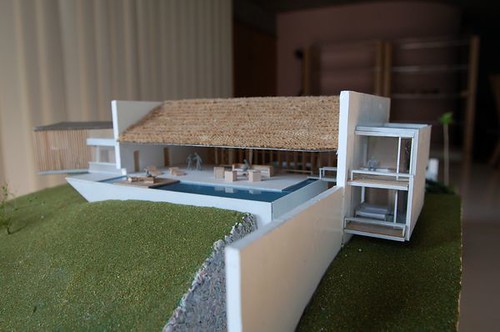
Shigeru Ban Designed House in Mirissa, Sri Lanka


Shigeru Ban Designed House in Mirissa, Sri Lanka for For Mr. Priengiers jnr.
Local Consultants - PWA


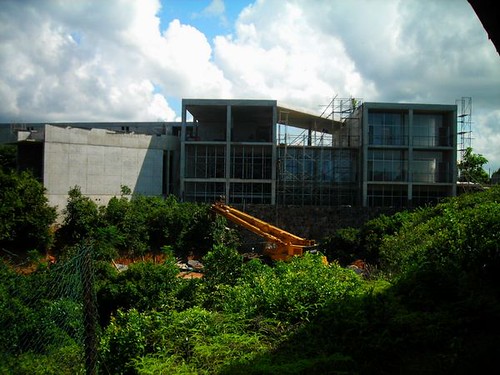
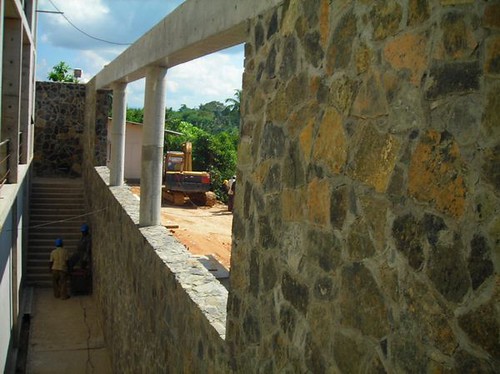
Tadao Ando Designed House In Mirissa, Sri Lanka

Designed by world famous Architect Tadao Ando, the House in Mirissa for Mr. PRINGIERS snr.
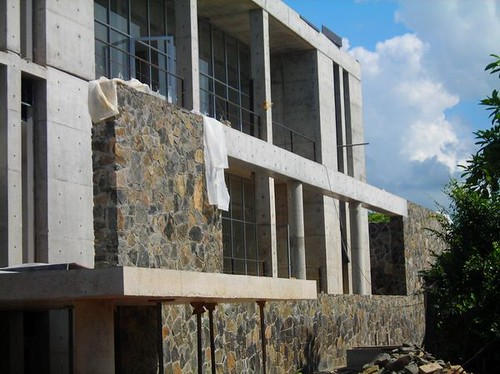
Local Consultant - PWA
Unfortunately I don't have any images of the finish product taken from an interesting angle.


Sunday, July 12, 2009

The Architectural Conendrum : Amendments to the UDA act


In 2009 April the UDA (Urban Development Authority) act was amended so that the Architect gains full responsibility in designing buildings. This new amendment has been welcomed with a lot of criticism, especially by the draftsperson’s guild.
It is true that there maybe a handful of Architects in the country (around 500) since the process in creating an Architect is a strenuous and hard journey, but that does not mean that the amount of Architects in the country is insufficient to feed its needs.
The haphazard developments littering the urbanscape are the product of a society deprived of the services of such professionals, wherein that profession itself is nurtured and nourished by the society itself. The amendment should be seen as the securing of public rights, rather than a hindrance, as a minute few that claim it to be. After all an Architect is a trained professional who has to go through a 7 year arduous educational process where as draftspersons are seen as a facilitating entity to the profession who only are experienced in drafting and not design.
By the enactment of the amended act, not only will the built environment improve but more notably, the bogus professionals who waste public wealth and time will see an end to their charades.

Find an article (in sinhala) on this here ( Use either iExplorer, or install relevant font from Website)

Wednesday, June 24, 2009

Appallagoda Ambalama

Find related wikipedia article here

The magnificent wonders, that our island of paradise holds are beyond the comprehension of even the minds of Sri Lankans. Sri Lanka in its true meaning is an island of paradise, which boasts of every form of art known to man. Among these, indigenous Architecture reign supreme.

In the early periods of Lankan history Ambalamas were used as traditional resting places. Though now in pitiful state remnants of their former glory cannot be hidden from a wandering eye.

Appallagoda Ambalama is situated in a rural environment in the village known as Appallagoda which lies 6 km from Kandy town and the nearest town being marassana, which is 1 km away.

The Appallagoda Ambalama, which was built in 1922 is known to be the largest stone made Ambalama in Kandy. It has a floor area of approximately 80 square meters and it measures 5.6 meters from floor to pinnacle. The roof is supported by two sets of stone columns, 12 externally and 4 internally. Inside, around the ambalama there are seats made out of stone. Especially in an area such as Kandy, cast differences play a vital role in the management of society. This is depicted by the level change seen in the seating area. at the top of the roof thee is a brass pinnacle which symbolizes the architectural pattern of that period. A prominent feature of this Ambalama is the stone “pinthäliya” which is situated in front of the Ambalama. Another prominent feature is the two broken stone columns in the north-eastern side of the Ambalama. The villagers in the area say that this was done deliberately when the Ambalama was built in order to ward off inauspicious omens.

Appallagoda ambalama was built in 1922 when Sri Lanka was still under British rule. The villagers say that the structure was built in order to house traveling trade parties, which were apparently abundant in this era. Although there aren’t any written documentation on this ambalama (maybe due to the fact that ,it is a fairly recent addition to the list of ambalamas in SriLanka) the village folk say that the ambalama was built under the orders of the “arrachchi” with the help of the villagers themselves. An interesting folktale revolves around the four names engraved in the four internal stone columns. It is said that these four names belonged to some “thugs” who were from the southern part of the island, apparently they had come to kandy with interests in commercial activity and settled down there. They had used their “thuggish powers” and engraved their names in the ambalama. Thus, those names of times by gone still remain unhampered by the winds of change.

Appallagoda ambalama is a colossal structure, which exhibits the power and glory of Sri Lankan Architecture. Though it may not be one of the oldest ambalamas in Sri Lanka it too has faced its share of our islands history and we think that it is our duty to help conserve these treasures of early Sri lankan architecture so that they may be appreciated by not only architects but by all of humanity.

Historic Ambalama left to mercy of elements

By Nimal Alagewatta

Meepe Ambalama, the 300 year old travellers’ rest at Meepe in Habaraduwa, has been left to the mercy of the elements without any attention being paid to it by the government or connoisseurs of ancient buildings and antiquities.

The historic Meepe Ambalama that should be protected as a national monument is today covered with the shrub jungle. The residents of the area request the Habaraduwa Pradeshiya Sabha to conserve this historic building for posterity.